
Is the Rome City Pass Worth It? Our review of the 3 day option

At the beginning of last April we spent a few days in Rome with the 3-day Rome City Pass, and I have to say — whilst it wasn’t without its quirks, it really did help shape a magical few days in the Eternal City. The pass gave us access to a wide range of attractions (some famous, some surprisingly quiet and moving), and while there were a couple of practical niggles, it definitely delivered on value and variety. Read our review to see how we got on with it.
What's Included in the 3-Day Rome City Pass?
Here’s what we got access to:
Colosseum, Roman Forum & Palatine Hill
Vatican Museums & Sistine Chapel
Castel Sant’Angelo
Pantheon
Catacombs of St. Callixtus (or St. Sebastian)
Vicus Caprarius – The Water City
Case Romane del Celio (painted Roman houses under the church)
Palazzo Barberini
Guided Walking Tour of Rome’s historic centre (which we skipped)
48-hour hop-on hop-off bus tour
Bike hire (we skipped this too)
Wax Museum (also skipped)
Ostia Antiqua (also skipped)
The major attractions had to be booked in advance: The Vatican, the Colosseum, Pantheon, Catacombs, Palazzo Barberini, so we took any slots we could get and then built the rest of the itinerary around those. It's helpful to have a map of Rome to hand to help group the attractions together logically as you put your trip together. Some attractions closed earlier than we had anticipated (the Water City), so a little re-jigging was necessary.
The Highlights of the Rome City 3-Day Pass Reviewed
Of course, the Colosseum is the big draw — and for good reason. It’s vast, atmospheric, and hard to believe it’s nearly 2,000 years old. Originally known as the Flavian Amphitheatre, it was inaugurated in AD 80 and could seat up to 50,000 people, who came to watch gladiators, animal hunts, and mock naval battles. We’d booked our timed entry well in advance (essential — they don’t mess around with crowd control here), and it was extraordinary to finally step inside.
The Roman Forum and Palatine Hill next door are included with your ticket, and together they offer a sprawling look at ancient Roman life — temples, basilicas, market halls and the legendary birthplace of Rome itself on the Palatine.
The Pantheon, now ticketed, is astonishing. Pre-booking for this really paid off. That roof — the world’s largest unreinforced concrete dome — is still an engineering marvel. The oculus at the top lets in a shaft of light (and occasionally rain), and the ancient Romans cleverly built the floor with a slight slope and drainage holes to deal with water. Originally a Roman temple, it became a church in the 7th century, and that’s part of why it’s still standing today.
One of the unexpected highlights was the Case Romane del Celio — the painted Roman houses beneath the church of Santi Giovanni e Paolo, just around the corner from the Colosseum. We were the only people there. These rooms date back to the 2nd–4th centuries AD, and the preserved frescoes and mosaics offer an intimate glimpse into Roman domestic life. Quiet, atmospheric, and completely transporting — we left wondering why more people don’t go.
We also visited the Catacombs, which gave us a whole new perspective (literally and figuratively). The long tunnels lined with early Christian tombs are surprisingly moving, and the guide added just the right balance of history and storytelling. Our coach driver was a hoot, a local who knew his history and how to have a good time - he even led a sing-a-long on the way back to the city centre.
Vicus Caprarius, hidden beneath a cinema near the Trevi Fountain, was another gem — here you can see part of the ancient Aqua Virgo aqueduct, still supplying the city today. It’s small but fascinating, and again, included in the pass.


We skipped the guided walking tour, mainly because we’d already seen the Trevi Fountain, Spanish Steps, and other major sights just by exploring the city on foot — which, honestly, is half the joy of Rome. The crowds were something else though even at the beginning at April, you could hear it before you could see it.
We also partook in a little window shopping near the Trevi Fountain and spotted this unmistakable Giuseppe Pennone tree - these can be found in London too as per our review earlier in the year here.
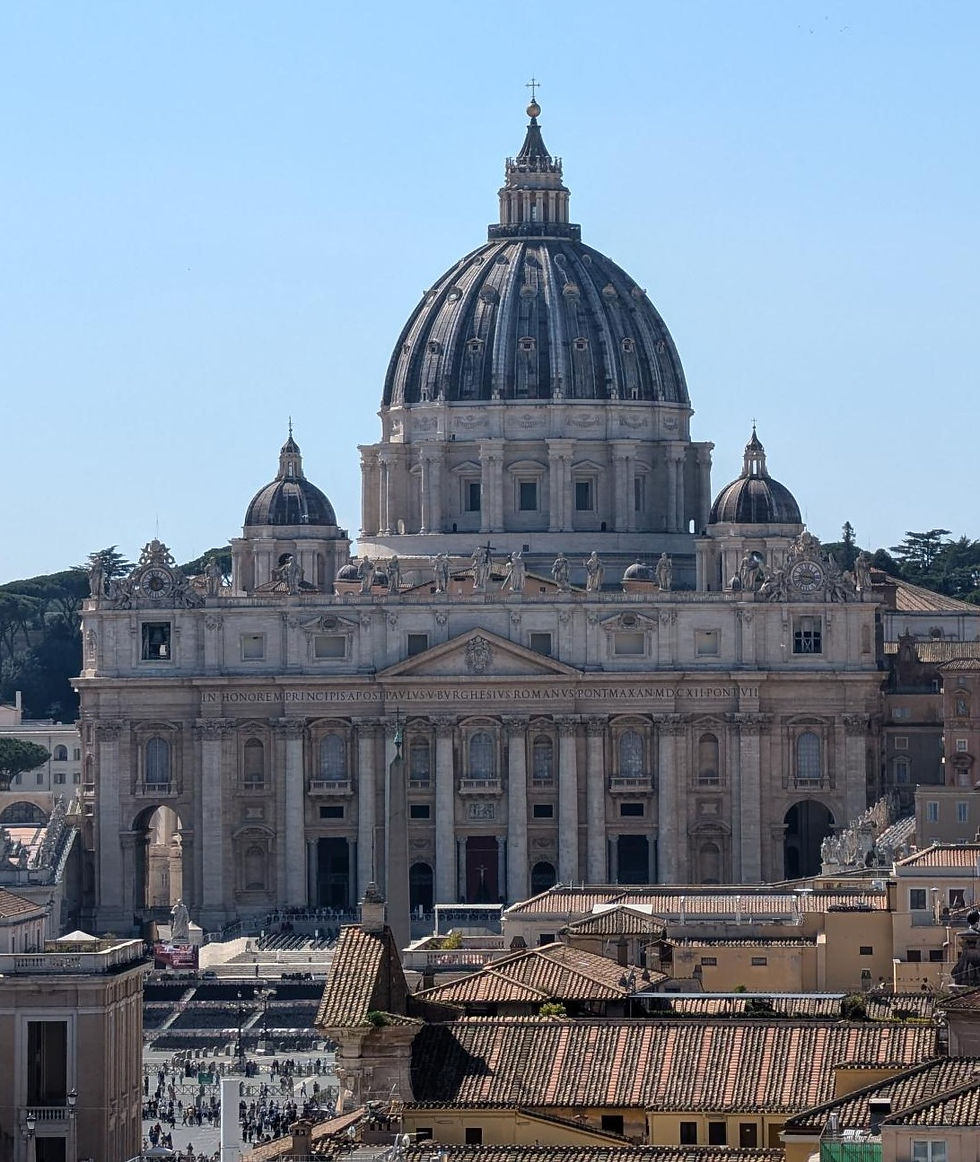
One of the biggest draws of the Rome City Pass — and frankly, of Rome itself — is the Vatican Museums. Included in the pass (though, like everything Vatican-related, you still need to pre-book a time slot), they’re a vast, opulent maze of galleries, courtyards, staircases and sculpture-filled corridors that feel like a palace, museum, and chapel rolled into one. Which, of course, they basically are.
The wealth and majesty of the place is genuinely overwhelming. Gold everywhere. Tapestries so intricate you feel like you’re looking at paintings. Entire ceilings frescoed by Renaissance masters, rooms painted by Raphael, marble floors so beautiful you feel guilty stepping on them. It’s a visual feast, and the sheer scale of the collection is staggering — around 70,000 pieces of art, though only a fraction is on display.
And here's a fun fact that’s less well known: the Pope can close the museums at any time. It’s one of those quirks of Vatican sovereignty — it's a city-state, after all. So when you book a visit, you’re also placing a small bet on the Pope being in a cooperative mood (and still alive). Thankfully, he was when we visited. We did quietly joke, as we queued up outside, “Hang in there, Your Holiness.”
The visit culminates in the world-famous Sistine Chapel, and nothing really prepares you for it. You walk through an increasingly elaborate series of galleries, then suddenly you're there — neck craned, eyes wide, trying to absorb the detail of Michelangelo’s ceiling and the Last Judgment behind the altar. You’re not allowed to take photos or talk — the staff will loudly “shhh” anyone who dares whisper — but in a way, that just adds to the reverence of the experience. It’s not often these days that a room full of people can fall completely silent.
We just stood there, absorbing the stories unfolding across the ceiling — The Creation of Adam, of course, but also the lesser-known panels and the hundreds of painted figures that surround them. Michelangelo was in his thirties when he started it, and hated the job at first. It's strange to think of him grumbling away up on the scaffolding, painting what would become one of the most iconic artworks in the world.
All in all, the Vatican Museums and Sistine Chapel are worth the crowds, the security checks, and the long walks through endless corridors. It’s not just about religious art — it's a celebration of human creativity and ambition, in its most gilded, unapologetic form. A must-see. Even if the Pope does hold the keys.
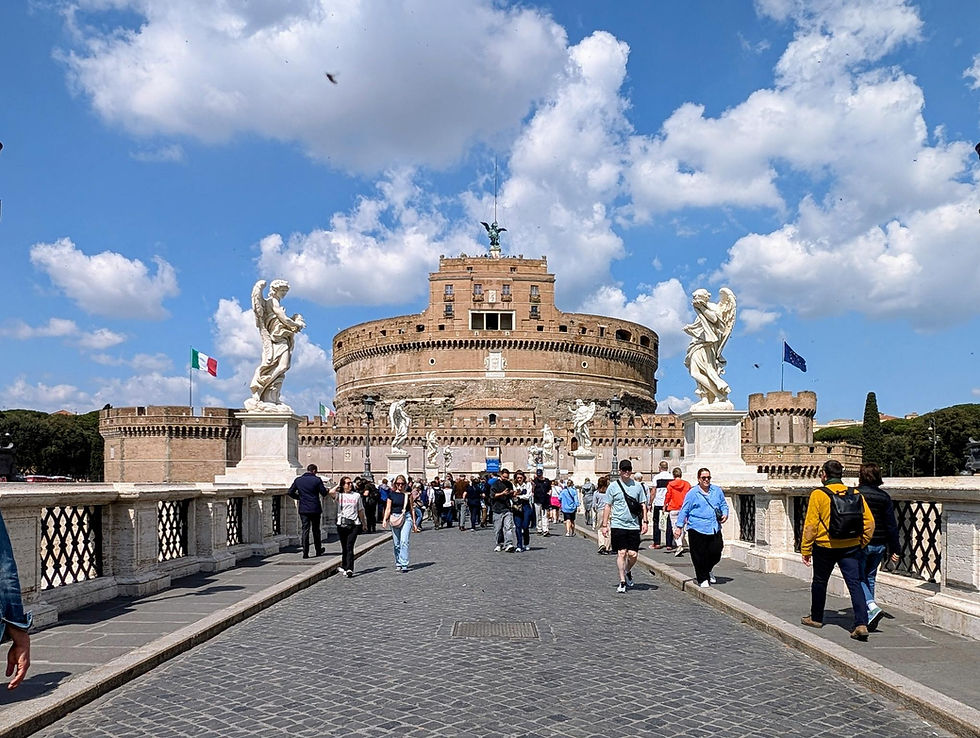
Castel Sant’Angelo is one of those Roman landmarks that feels like it’s stepped straight out of a film set — towering above the Tiber, circular and fortress-like, with its bronze angel gleaming at the top. Originally built in the 2nd century AD as Emperor Hadrian’s mausoleum, it’s had many lives since: fortress, prison, papal hideaway, and now a museum. The Rome City Pass includes entry, and it was well worth a few hours. The walk up through the spiralling corridors and echoing chambers is full of atmosphere, and you’re rewarded at the top with one of the best panoramic views in Rome — rooftops, domes, and the curve of the river below. There's a secret corridor (the Passetto di Borgo) that once connected it to the Vatican, just imagine popes sneaking along it during times of danger. A perfect blend of history, drama, and sweeping vistas.
Another lovely surprise included in the Rome City Pass — and often overlooked — is entry to the Galleria Nazionale d’Arte Antica (National Gallery of Ancient Art). It actually spans two locations: Palazzo Barberini and Palazzo Corsini, though most people, including us, tend to head for Palazzo Barberini, which is the larger and more visually striking of the two. We did, and it was a real treat — quieter than the Vatican, but still bursting with incredible art and atmosphere.
The building itself is worth the visit. Palazzo Barberini is a grand Baroque palace just a short walk from the Trevi Fountain, originally built in the 17th century for Pope Urban VIII (born Maffeo Barberini — hence the name). It’s got that classic Roman mix of art, politics, and power, all tucked behind a surprisingly low-key entrance.
Inside, expect a curated collection of Italian Renaissance and Baroque art, with works by Caravaggio, Raphael, Titian, El Greco, and more. It’s a more contemplative experience than the Vatican Museums — fewer people, fewer selfie sticks, and more room to breathe. The collection feels carefully presented rather than overwhelming, and the gallery allows you to get up close to the art without having to jostle your way to the front.
Caravaggio’s "Judith Beheading Holofernes" is particularly striking — visceral, dramatic, and bathed in that signature chiaroscuro.
The second site, Palazzo Corsini, is across the river in Trastevere and houses a smaller, more intimate collection in another beautiful palace. If you’ve got time and want to escape the crowds entirely, it’s a peaceful way to spend an hour or two — and the walk through Trastevere is a delight in itself.
Including these galleries in the City Pass was a bonus we hadn’t expected to enjoy quite so much — but they gave us a richer sense of the artistic soul of the city, beyond the ancient ruins and the Vatican grandeur. And best of all, you rarely have to queue, so it’s the perfect stop if you’re feeling a bit overwhelmed by the more tourist-heavy sites.
So if you're using the Rome City Pass and looking to slow down the pace for an afternoon, don’t miss the National Gallery. It’s Rome at its most elegant and reflective — beautiful buildings, masterpieces by the greats, and a bit of breathing space to take it all in.

We also popped by the Basilica di Santa Maria in Cosmedin, just a short walk from our hotel, to visit the famous Mouth of Truth. Yes, we queued. Yes, we stuck our hands in. And yes — we survived. If you're wondering why it feels familiar, it’s the iconic moment from Roman Holiday (1953), starring Audrey Hepburn and Gregory Peck. Worth it for the film reference alone.
Top row, left to right: modern bedroom in Il Monastero Collection, the exterior of the hotel
Bottom row; the courtyard space at the hotel and the Circus Maximus looking towards the hotel and the Palladium Hill
Food, Glorious Food
In the evenings, we mostly ate near our hotel, Il Monastero Collection, which is set in a beautifully converted monastery facing the Circus Maximus. It’s serene and spacious, with views across to the Palatine.
Guenda was our favourite bar and restaurant, with the restaurant boasting 1000 year old ceiling, the staff were friendly and accommodating.
On one of the evenings, we treated ourselves to a tasting menu at Ad Hoc, also nearby. The multiple courses were very generously portioned, so much so that I couldn't eat it all — delicate pasta, slow-cooked meats, and traditional desserts. Not the best meal we've ever had, but nice service in a nice place, at a pretty reasonable price for the menu.
Typical Roman dishes to try? Don’t miss:
Cacio e pepe – pasta with pecorino and black pepper
Carbonara – no cream here, just eggs, cheese and guanciale
Saltimbocca alla Romana – veal with prosciutto and sage
Supplì – fried rice balls filled with mozzarella
Tiramisu – because… obviously

Final Thoughts
So — is the 3-day Rome City Pass worth it? Yes, if you want to pack in a lot and avoid ticket queues. Yes, if you're open to discovering quieter sites like the Case Romane and the Catacombs. It’s not quite as smooth as other passes (you’ll need to collect some tickets from the Tourist Office), and the hop-on hop-off bus was a bit sporadic — we often saw other companies’ buses more frequently. But it absolutely helped us shape a brilliant few days, combining big hitters with hidden corners. It's certainly worth it if like us you visit the Vatican, Colosseum, hop-on hop-off bus, and at least 3–4 smaller museums/sites,
then the pass probably saves you €40–90, plus the convenience of pre-booked timed entries. The real value is often the skip-the-line access for the Vatican and Colosseum, which can sell out weeks ahead.
Using current standard advance-booking prices for 2025–2026, buying all of those separately would cost roughly €180–€240 per adult, depending on whether you chose skip-the-line tickets and guided tours.
More info & bookings: www.turbopass.com/rome-city-pass
Tourist Office for voucher pickup: Piazza d’Aracoeli, 16
Hotel: Il Monastero Collection, Via dei Cerchi 87, Rome


Comments